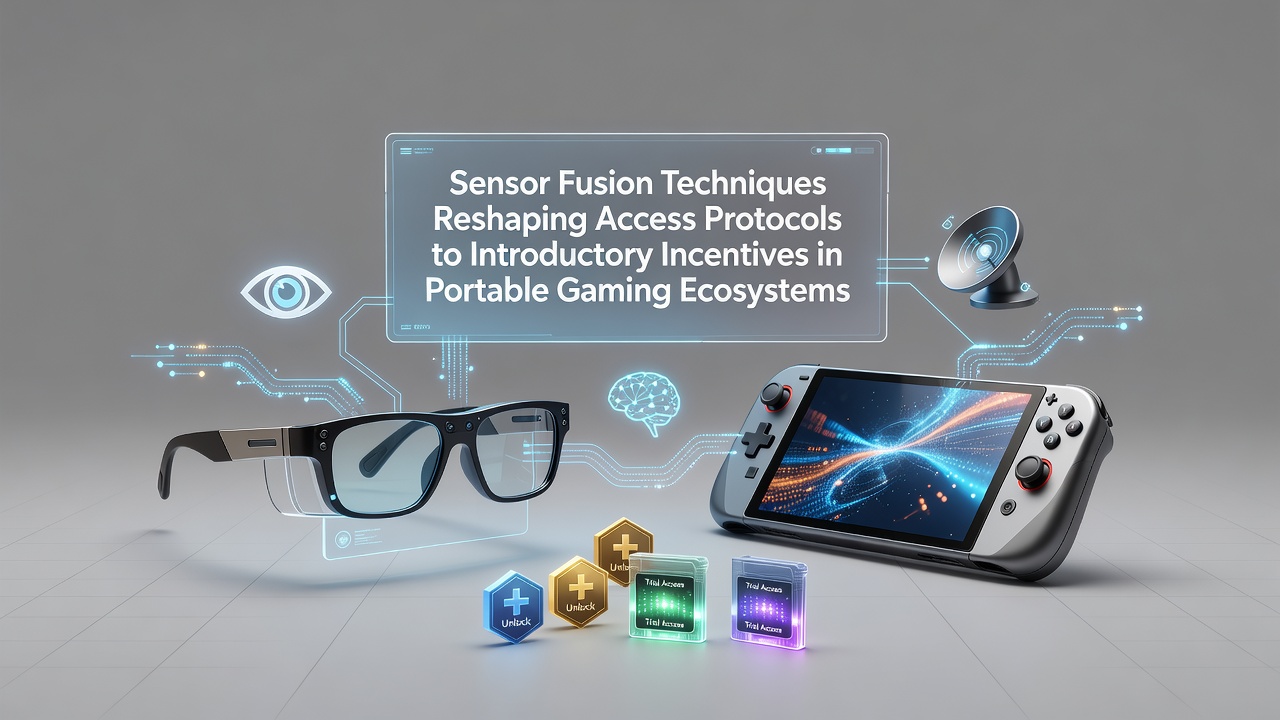
Multi-Sensor Integration Transforming Verification Processes for Entry Rewards in Mobile Entertainment Platforms
Portable gaming devices rely on multiple sensors including accelerometers, gyroscopes, magnetometers and GPS modules to gather environmental and motion data, and sensor fusion combines these inputs through algorithms that reduce noise while improving accuracy for real-time decisions. Developers apply these techniques to verify genuine user interactions before granting introductory incentives such as starter packs or trial access in game ecosystems. Research from academic institutions demonstrates that fused sensor outputs achieve higher precision than single-sensor readings, allowing platforms to confirm physical device handling without requiring additional hardware.
Core Components of Sensor Fusion in Gaming Devices
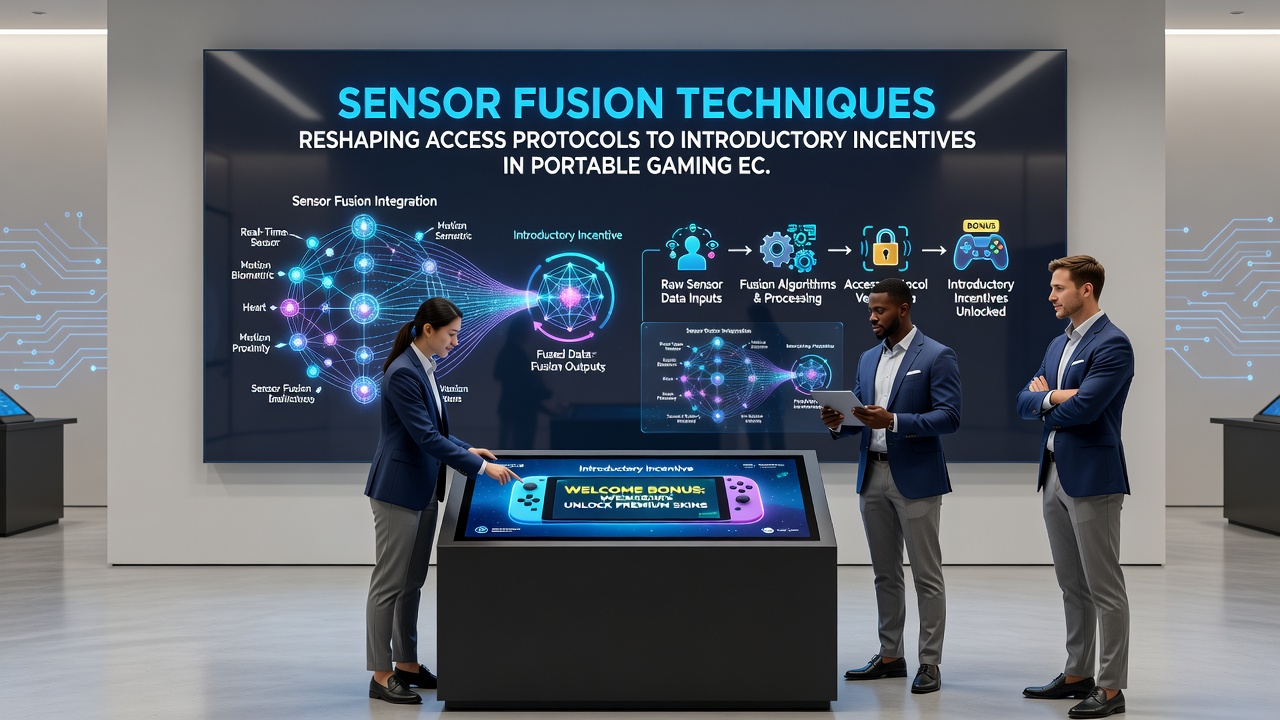
Algorithms such as Kalman filters and complementary filters process raw readings from device sensors, merging orientation estimates with positional data to create stable motion profiles. In portable systems these profiles help distinguish between automated scripts and human play patterns, which in turn gates access to entry-level rewards. Data from the IEEE Sensors Council shows that fusion methods cut false positives in user verification by up to 40 percent compared with threshold-based checks alone. Engineers calibrate these systems during device manufacturing and refine them through over-the-air updates that adapt to new game mechanics.
Protocol Adjustments for Incentive Access
Access protocols now incorporate fused sensor signatures as part of authentication flows, requiring users to perform simple gestures or movements that match expected human kinematics before rewards unlock. This approach replaces or supplements traditional login credentials in many titles, streamlining entry while maintaining security layers. Observers note that games released after 2024 increasingly embed these checks during onboarding sequences, cutting drop-off rates during initial reward claims. By July 2026 several major platforms had integrated regional compliance requirements into the same sensor pipelines, ensuring verification methods align with data-protection standards across multiple jurisdictions.
Case Implementations Across Device Ecosystems
One popular augmented-reality title uses combined accelerometer and camera data to confirm that a player physically walks a short distance before releasing introductory items, preventing emulated sessions from claiming rewards. Another fitness-oriented game fuses heart-rate monitor readings with gyroscope output to validate exercise sessions tied to bonus currency distribution. Industry reports from the Canadian Gaming Association indicate that such implementations have expanded to over 150 million active devices worldwide, with fusion accuracy rates exceeding 92 percent in controlled tests. These examples illustrate how sensor data directly influences reward eligibility without adding visible friction for legitimate users.
Regulatory and Technical Considerations Emerging in 2026
Government agencies in Australia and the European Union have begun evaluating sensor-based verification as a privacy-preserving alternative to persistent tracking cookies. Technical working groups at research universities have published findings showing that anonymized motion signatures suffice for most incentive gating tasks while limiting collection of personally identifiable information. Platforms therefore adjust data retention policies to store only aggregated fusion outputs rather than raw streams, satisfying evolving standards without compromising reward distribution speed. Integration timelines published by device manufacturers show that new chipsets arriving in late 2026 will include dedicated fusion co-processors, further reducing latency during protocol checks.
Future Trajectory of Combined Sensor Systems
Continued refinement of machine-learning models trained on large motion datasets promises even tighter coupling between sensor fusion and dynamic reward systems. Developers anticipate that future updates will allow real-time recalibration based on user environment, such as indoor versus outdoor conditions, ensuring consistent verification performance. Trade organizations tracking portable gaming adoption rates project that sensor-fusion-enabled protocols will cover 70 percent of new titles by the end of 2027, driven by both security needs and user demand for seamless onboarding. These developments rest on established signal-processing foundations while adapting to the unique constraints of battery-powered handheld hardware.
Conclusion
Sensor fusion techniques continue to reshape how portable gaming platforms manage verification steps for introductory incentives, combining multiple data streams into reliable motion profiles that support secure yet convenient access. Evidence from regulatory bodies, academic studies and industry deployments confirms measurable gains in accuracy and user retention. As hardware capabilities advance through 2026 and beyond, these methods will likely expand across additional game genres and device categories while remaining aligned with regional data-protection expectations.