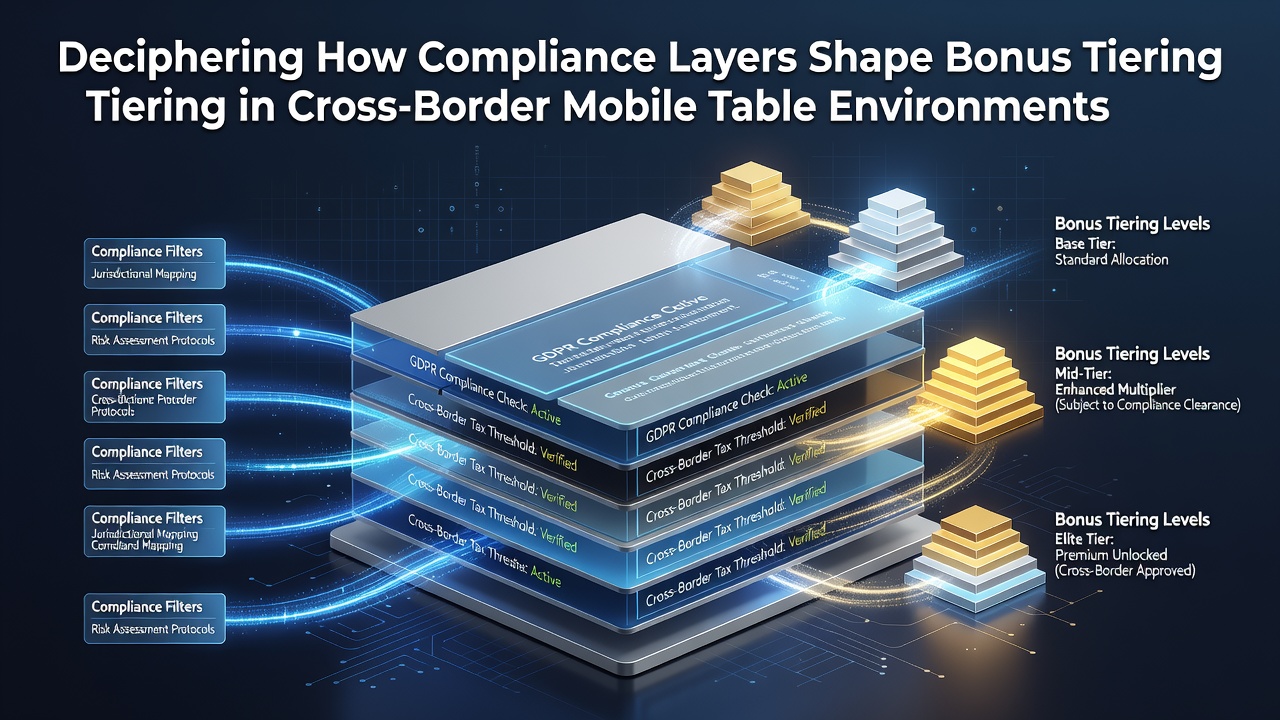
Jurisdictional Overlays Redefining Reward Gradients in Transnational Mobile Table Play
Compliance structures in cross-border mobile table environments operate through multiple regulatory overlays that directly determine how operators structure bonus tiers for players accessing live dealer blackjack, roulette, and poker simulations on portable devices, and data from industry reports shows these layers create distinct reward gradients depending on the player's registered jurisdiction and the operator's licensing footprint.
August 2026 marks a notable point in this landscape because several regional updates to digital gaming rules take effect simultaneously, forcing platforms to recalibrate entry-level incentives, mid-tier reload packages, and high-volume loyalty multipliers to stay aligned with new verification thresholds and cross-border data-sharing mandates.
Defining the Compliance Layers at Play
Regulatory bodies impose requirements on know-your-customer protocols, anti-money laundering checks, and bonus disclosure standards that vary sharply between licensing regions, and observers note that an operator licensed in one European jurisdiction while serving players in North American markets must maintain separate bonus calculation engines to prevent conflicts with local caps on promotional value or wagering contribution percentages.
Research from the Malta Gaming Authority indicates that operators adjust tier progression speeds when compliance data flows trigger additional review steps, often extending the time required for players to unlock higher reward brackets until full documentation clears automated screening systems.
Impact on Tiered Incentive Structures
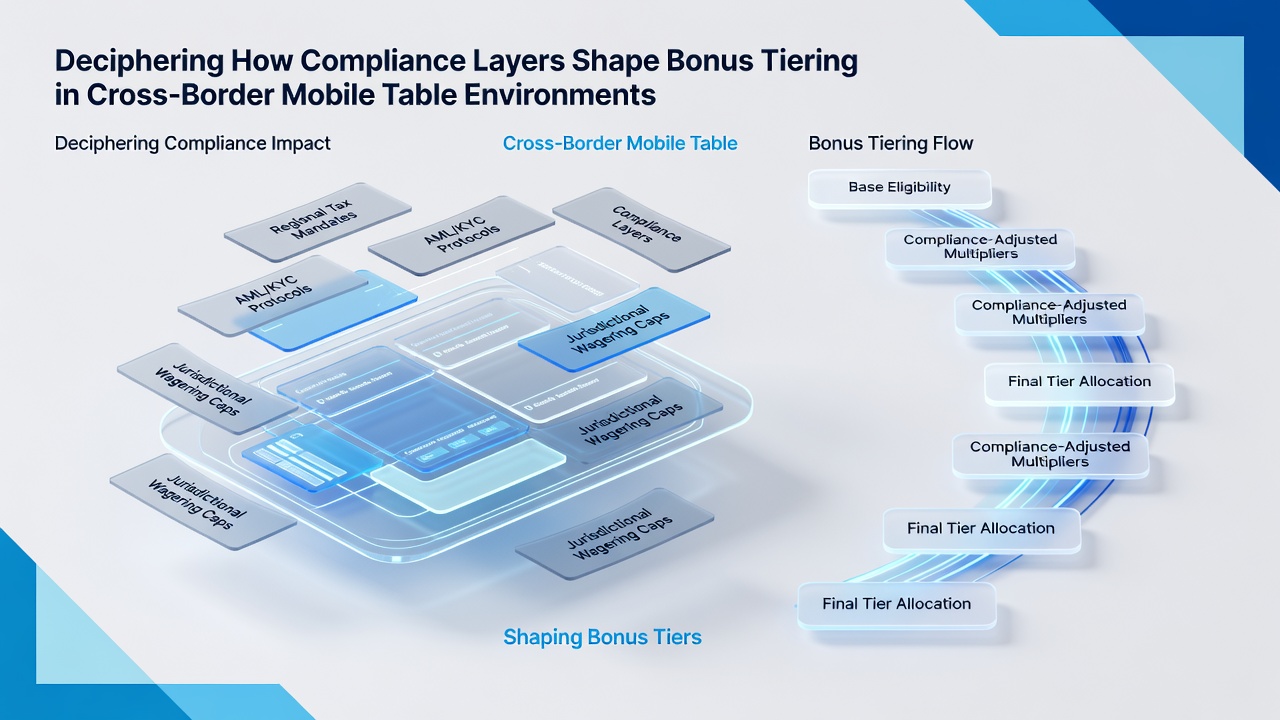
Bonus tiering in these environments relies on algorithmic scoring that factors in deposit frequency, game type participation, and session duration, yet compliance filters overlay additional variables such as geographic risk scores and transaction velocity limits that can slow or accelerate progression between levels. Those who track platform updates report that a player in a lower-risk jurisdiction may advance to a premium cashback tier after meeting a lower turnover threshold, whereas the same activity pattern from a higher-scrutiny region triggers extended review periods before teh tier activates.
Studies from gaming research institutions reveal that mobile table environments face tighter constraints because live dealer streams transmit real-time data across borders, requiring operators to segment bonus eligibility based on the originating network and device fingerprint to satisfy differing responsible gaming caps.
Cross-Border Data Requirements and Reward Access
Operators maintain separate compliance databases for each licensed market, and figures from regulatory filings show that these databases feed into unified loyalty engines only after passing jurisdiction-specific validation routines, which creates noticeable differences in how quickly mobile users receive tiered free-play credits or reduced house-edge table promotions. One study revealed that platforms serving both European and Canadian audiences often delay high-tier bonus releases for cross-border sessions until dual verification completes, effectively stretching the timeline between initial qualification and actual reward delivery.
According to reports issued by iGaming Ontario, operators must apply distinct contribution rates for table game wagers toward bonus clearing when players access the same mobile lobby from different provinces or countries, and this differentiation directly shapes which reward tier becomes available after a set number of hands played.
Algorithmic Adjustments in Mobile Table Ecosystems
Platform engineers integrate compliance signals into the scoring models that assign players to bonus brackets, and data analytics teams adjust weighting factors for transaction origin, device location history, and prior compliance flags so that the same wagering volume produces different tier outcomes depending on the regulatory corridor traversed. Those who've examined code documentation note that live dealer environments add an extra variable because stream latency and regional content restrictions can flag sessions for manual review before tier benefits unlock.
Evidence from industry white papers demonstrates that operators reduce maximum bonus values or extend play-through requirements in markets with stricter consumer protection rules, while maintaining more generous scaling in regions where oversight focuses primarily on operator solvency rather than individual reward limits.
Future Alignment Patterns Emerging in 2026
With multiple regulatory calendars converging around August 2026, platforms have begun pre-emptively mapping bonus tier logic against anticipated rule changes in both established and emerging markets, and analysts observe that these preparations include building conditional tier pathways that activate only after specific compliance milestones are logged in each jurisdiction's system. The result is a more fragmented reward landscape where mobile table players experience different progression speeds even when using identical game clients and deposit patterns.
Conclusion
Compliance layers continue to dictate the precise mechanics of bonus tiering across cross-border mobile table environments through overlapping verification, data-sharing, and contribution rules that operators must embed into their reward engines, and ongoing regulatory shifts scheduled for mid-2026 will likely deepen these divisions as platforms refine their systems to maintain lawful operation while serving users from multiple regions simultaneously.